
"Leadership today isn't about what you chase. It's about what you ignore." - Futurist Jim Carroll
Futurist Jim Carroll is writing his end-of-2025 / introduction-to-2026 series, 26 Principles for 2026. You can follow along at 2026.jimcarroll.com. He welcomes your comments.
We are on Day 14 of my 26 Principles for 2026 - guidance to guide you through a world of exponential change. If you don't remember why this is so critical, go back and read the intro!
Recently,? You’ve humbled your ego (Day 12) and opened your ears to the young (Day 13).
You are ready to listen to the future.
But suddenly, you have a new problem. You can't hear anything but noise. Have you noticed how much hype is out there these days?
Separating reality from hype has always been a challenge - I've certainly been covering that issue for a long time. You can't speak and write about the future without giving people advice and guidance about what's going on out there, and separating the real from the noise.
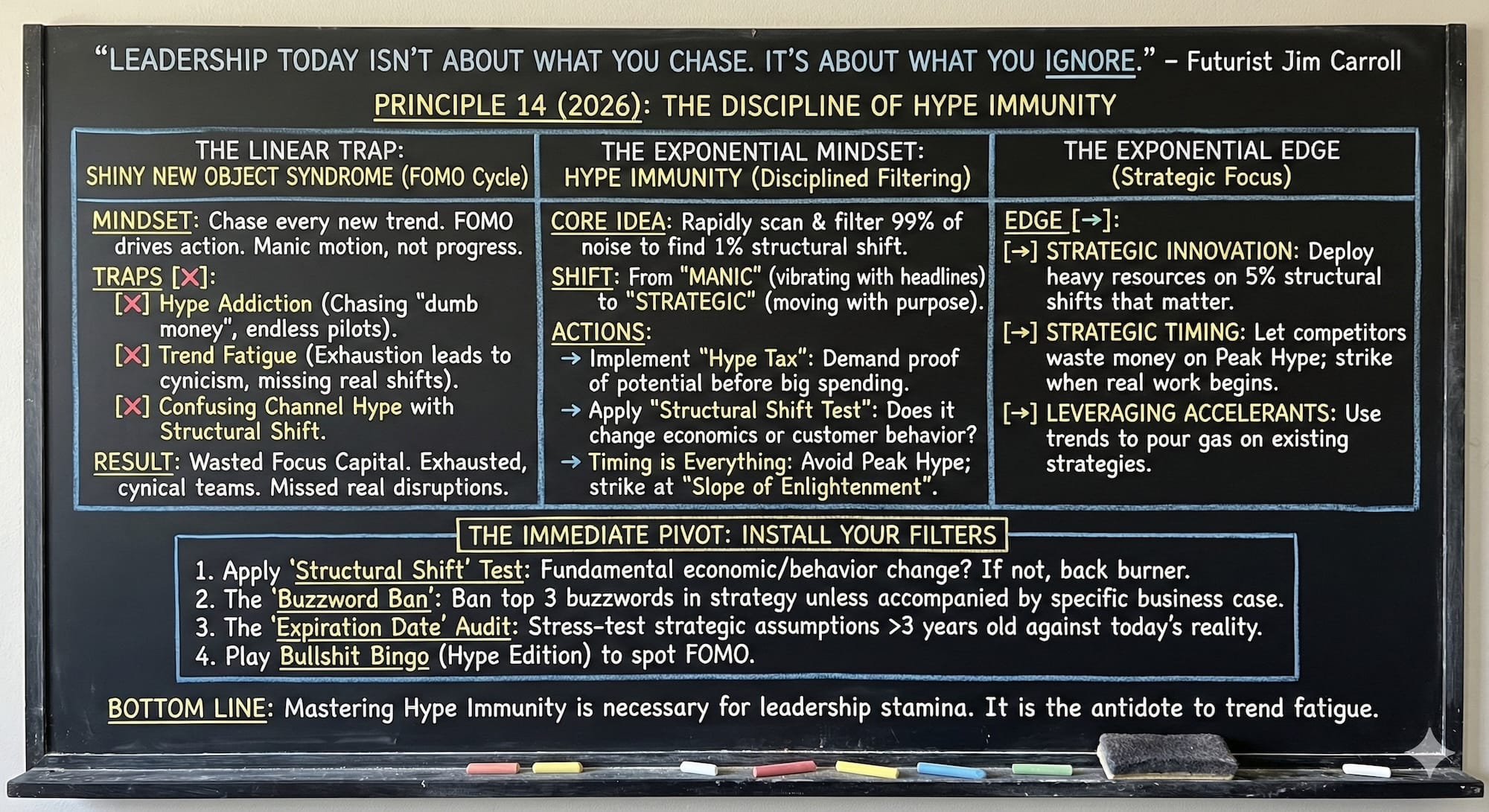
But there is more hype than ever before - and so on Day 14, I want you to think about the importance of developing what I call Hype Immunity - aka the discipline of ignoring almost everything. Here's your chalkboard summary!
Think about it. In our old, slow, linear world, change happened slowly enough that you could evaluate new technologies, disruptive trends, new products, and new innovation opportunities, one at a time. You had the luxury of waiting to see what settled, what was real, and what you really needed to worry about.
That luxury of time is gone. Forever. In an exponential world, you are bombarded daily with "game-changing" breakthroughs. There is just so much to keep track of! AI agents today, spatial computing tomorrow, quantum adoption next week. Not to mention stuff not yet invented or imagined.
Did I mention that this has become one of the main images shared at the start of most of my recent keynotes? Think about what it represents: "Companies that do not yet exist will build products not yet conceived using ideas not yet in existence with methodologies yet to be defined with ideas yet to be imagined."
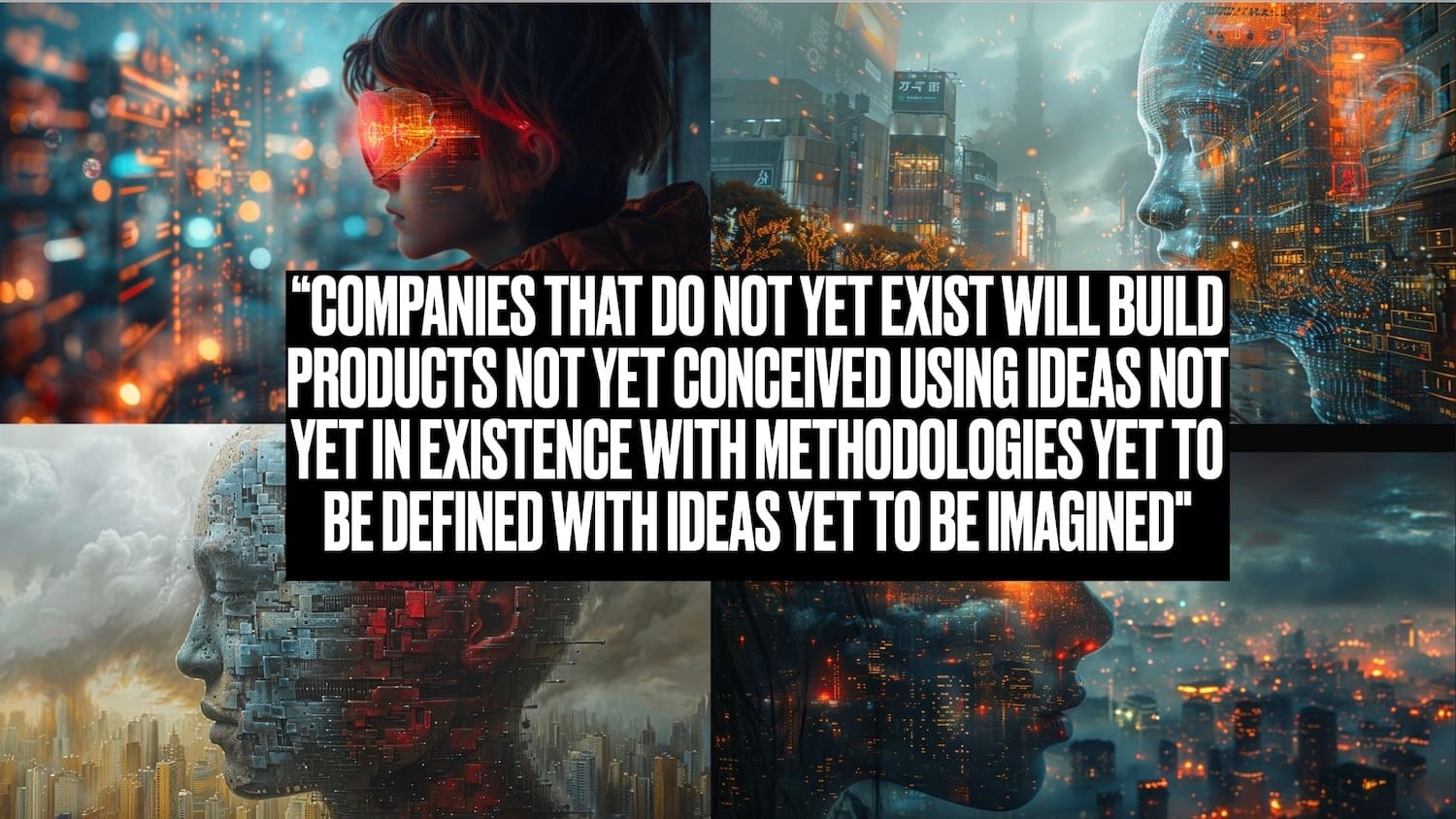
Some of these products and ideas could be challenging, new, disruptive, and competitive threats; others will fizzle and fail and can be safely ignored.
The art for you is figuring out which ones!
Shiny New Object Syndrome!
For a long time, folks like me have been talking about the tendency of people to chase 'shiny new objects."
Remember the 'metaverse '? Wasn't it the hottest thing on the planet just a few years ago - before AI came along? It was just reported that Facebook lost almost $100 billion in its ill-fated efforts to drag everyone into some weird new virtual world. Companies that followed the shiny object that it represented probably wasted just as much.
Here's the thing - If you chase every shiny object, you will exhaust your organization and achieve nothing. That's why the critical leadership skill in 2026 is no longer just spotting trends—that’s easy. The critical skill is rapidly filtering the 99% marketing hype to find the 1% structural shift that actually matters to your business model.
You need to develop an organizational immune system against the noise. The discipline you must master is Hype Immunity.
Cutting Through the Hype
I have been covering the issue of cutting through hype and focusing on trends that matter for decades in my posts and keynotes. Looking back at my archive, I've been hammering home the need for disciplined filtering for a long time. Like, a really long time. I think it's one of the most important things I do from the stage, even if I've burst some bubbles along the way!
Remember the hysteria over dot. coms? Back in 1999, a year before the entire industry imploded, I was on a national TV show, warning of what was coming. I took a lot of abuse for that - but as a futurist, I had already learned to differentiate between what was real and what was not!
Over the years, I've repeated that fine art - take a look at the key observations I've made, the implications of those stories, and what it means in terms of our exponential world going forward:
The "Shiny New Object" Syndrome
- The Observation: At a basic level, I have written multiple times about the deeply ingrained organizational tendency to chase the "shiny new object." This is the failure to distinguish between a new, intriguing product/service and a true structural shift, causing organizations to pivot wildly based on fear and headlines.
- The Implication: When you are busy reacting to every new trend, you burn up a really precious resource - let's call it "Focus capital." The cost isn't just the pilot programs that go nowhere, but the creation of cynical, fatigued teams that refuse to engage when a real trend arrives.
- The Exponential Reality: That's why one of your most important decisions today is to choose what to ignore. You must implement a "Hype Tax" on every new suggestion, forcing the individual or team proposing the idea related to the trend to demonstrate its potential reality before authorizing any resource expenditure. Note - this shouldn't go against the idea that it's critical to play, investigate, and explore new trends - but to do so on a limited budget and on a limited scale. (The 'small' part of my Think Big, Start Small, Scale Fast mantra!)
The Hype Cycle Curve (Timing is Everything)
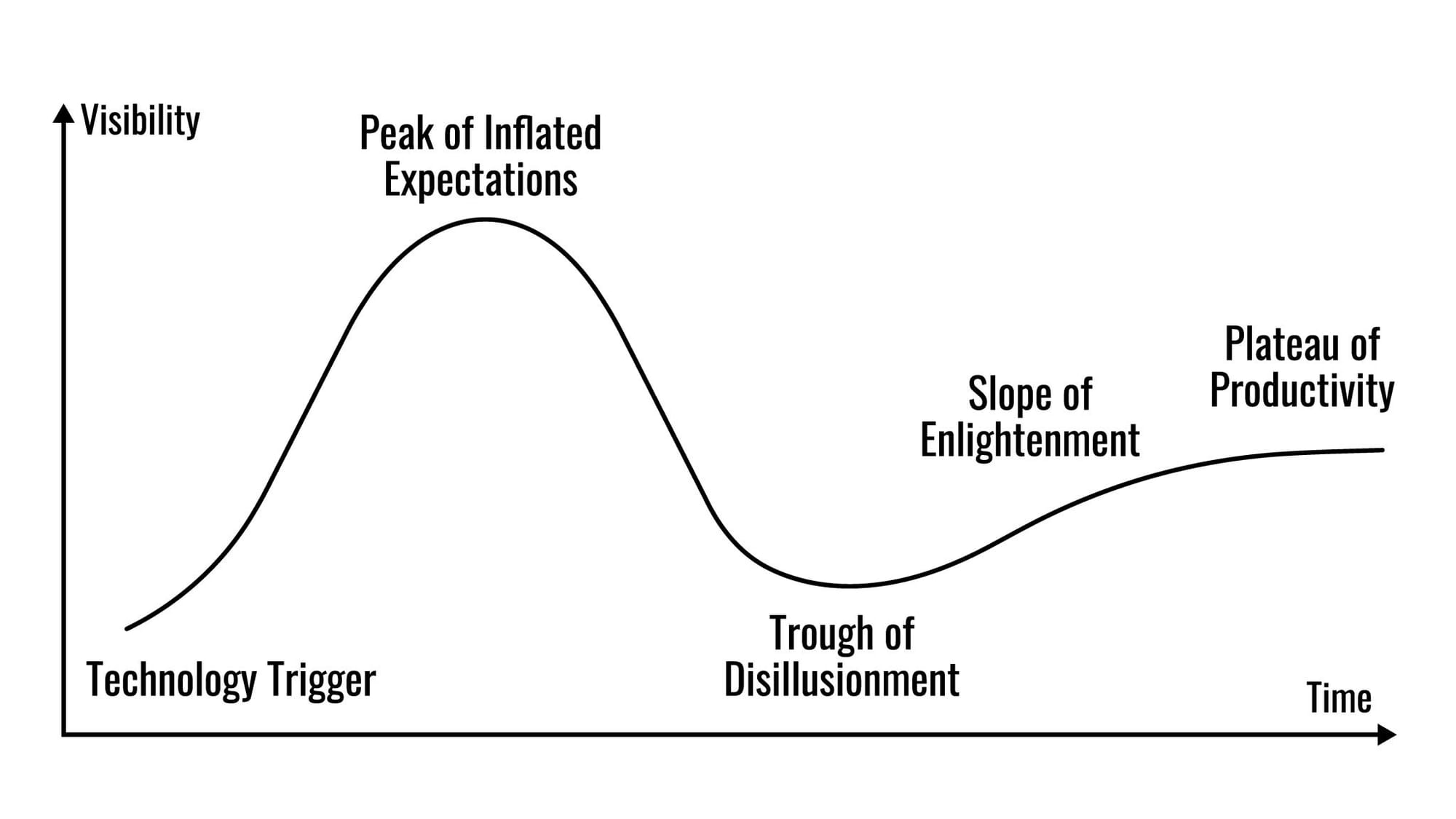
- The Observation: In my analysis of innovation, I frequently reference the inevitable "Peak of Inflated Expectations" that accompanies every major trend. Everyone rushes in at the peak of the noise, right before the inevitable crash into the "Trough of Disillusionment."
- The Implication: Investment driven by the excitement at the peak is almost guaranteed to be wasteful. This is investment driven by FOMO (fear of missing out), not by strategic foresight. FOMO is one of the most dangerous activities you can undertake - I've seen far too many companies get involved in some fast emerging trend simply because everyone else is - without any real understanding of what they are doing and why.
- The Exponential Reality: Mastering Hype Immunity means understanding the timing of innovation. Strategic investment should usually be reserved for when the noise dies down, and the real, boring work of integration begins—what we call the "Slope of Enlightenment." That doesn't mean you can't get involved in front - indeed, you should be carefully exploring the trend actively through the trigger, peak and trough periods - but in a limited way.
You need to take this image and tape it to your wall - and stare at it EVERY SINGLE DAY.
Ignoring the Channel Hype (The "Thing" vs. The "Shift")
- The Observation: In my trend reports over the years (such as on the future of health), I noted leaders focusing obsessively on the new device (e.g., the iPhone or a new app) while missing the underlying structural shift (e.g., the quantified self ecosystem and remote diagnostics).
- The Implication: The new channel or device is often just the hype; the fundamental change in customer behaviour and the ecosystem it enables is the signal.
- The Exponential Reality: Before committing resources, you must apply the Structural Shift Test: Does this technology fundamentally change the economics of how we create value, or the fundamental behaviour of our customer? If it’s just a new channel or a faster horse, put it on the back burner.
The "Manic vs. Strategic" Distinction
Let's talk about the fact that many companies or teams within them often go into a 'manic' phase, where everyone is rushing about exploring and working with. new trend - driven by the speed of their FOMO - without any real strategic plan. The result? A lot of wasted energy!
- The Observation: I often contrast organizations that are moving fast with organizations that are merely manic. Manic organizations vibrate with energy but don't go anywhere because they change direction with every new headline. They're like the dog Doug in the movie Up! Squirrel!
- The Implication: Motion is not progress. A manic organization confuses busyness with strategic action, exhausting its talent on "innovation theatre."
- The Exponential Reality: Hype Immunity requires the discipline to stand still while everyone else is running in circles, only moving when you have identified a clear, straight line to exponential value.

The "Dumb Money" Warning
Hype causes companies to place good money into dumb money faster, because everyone else is spending dumb money!
- The Observation: I have repeatedly warned in keynotes during boom times (dot-com, crypto, pre-2008) that when "dumb money" pours into a sector—when investment is driven by FOMO rather than fundamentals—it is a massive noise signal. Follow the dumb money - don't do what it does!
- The Implication: Remember this key idea: The volume of venture capital flying around a buzzword is often inversely proportional to the actual strategic value of the trend at that moment. The more money pouring into a trend, the further it is up the Peak of Inflated Expectations. (This is a really interesting observation in light of what is going on with AI right now!)
- The Exponential Reality: Be a contrarian filter. Think about doing the opposite of whatever everyone else is doing. Just because everyone is investing in it doesn't mean it's real; in fact, massive hype is often your signal to wait on the sidelines until the inevitable shakeout occurs.
Just a few years ago, I was on a call with a client who wanted a keynote around their blockchain and crypto strategy. I kindly suggested that, given their industry and the timing of the trend, they were far too soon. I didn't get the gig. That hurt - but I was right. Ouch.
The "Trend Fatigue" Reality
Last but not least, getting into a mindset where too much of a hype filter can cause you to miss important trends that really matter. You stop doing anything because you can't make out what's real with everything!
- The Observation: I write frequently about the sheer exhaustion leaders feel from being told everything is about to change every five minutes. Some choose to ignore things, stop investing, and start waiting. This is often worse than investments and actions taken in the context of FOMO, because then you start to fall behind.
- The Implication: The implication? This exhaustion leads to cynicism, where leaders eventually tune out everything, including the real signals that will eventually disrupt them. They become numb to the future. That's not good!
- The Exponential Reality: Hype Immunity isn't just a good strategy; it's necessary for leadership stamina. It is the antidote to trend fatigue, allowing you to remain curious without becoming exhausted. It's helping you allocate your precious innovation capital into the things that really matter!
So, where does this leave us? With a good structure for thinking about how to deal with hype in an exponential world.
1. The Exponential Mindset
It's all about learning the fine of hype Immunity.
It's the disciplined way to rapidly scan the horizon and immediately discard the vast majority of incoming information about fast-moving trends as "noise."
It is developing the understanding that "new" does not always mean "important."
It is learning the difference between being Manic (vibrating with every new headline, FOMO thinking!) and being Strategic (moving with purpose only when the signal is clear).
A leader with Hype Immunity is joyfully cynical about every new trend, but deeply curious about the ones that really matter.
2. The Linear Trap
Without this immunity, organizations burn through their precious innovation capital by falling into a destructive cycle:
- Hype addiction (The FOMO cycle): Driven by the fear of missing out and seeing "dumb money" chasing a trend, leadership teams suddenly pivot to chase the "shiny new object." They mistake motion for progress, launching endless pilots that go nowhere. The result is that people feel like there is no success - because there isn't, particularly when the trend fizzles out!
- Trend fatigue (The cynicism cycle): The impact of this manic phase? After chasing hypes that don't pan out, the organization becomes exhausted. When a real structural shift arrives, leadership dismisses it as "just more hype" because they are too tired to differentiate.
When you think about it, this is often the essence of what happens with disruptive business models - too many companies miss the important trends that forever change their business model and market, because they've become too tired of chasing every new thing, with the result that they miss the most important thing!
3, The Exponential Edge
Now, in a world in which trends come at us faster than ever before - and keep on accelerating - moving into the right exponential mindset is critical!
That's why developing Hype Immunity is so important!
- Strategic, realistic innovation: By ignoring 95% of the noise, you deploy heavy resources against the 5% structural shifts that matter, achieving scale while competitors are still dabbling in "innovation theatre."
- Strategic timing: You let competitors exhaust themselves and waste money during the "Peak of Inflated Expectations." While they are investing heavily, you are merely playing. The result? You preserve your capital and strike when the technology hits the "Slope of Enlightenment." That's hitting the trend when the hype dies down, and the real work begins.
- Leveraging Accelerants: You don't waste time building new strategies for trends that are just "accelerants." Instead, you use those shifts to pour gas on the strategies you already have in place.
4. The Immediate Pivot
Start learning how to apply this trend today. Want an example? AI agents!
I cringe when I see posts like this:
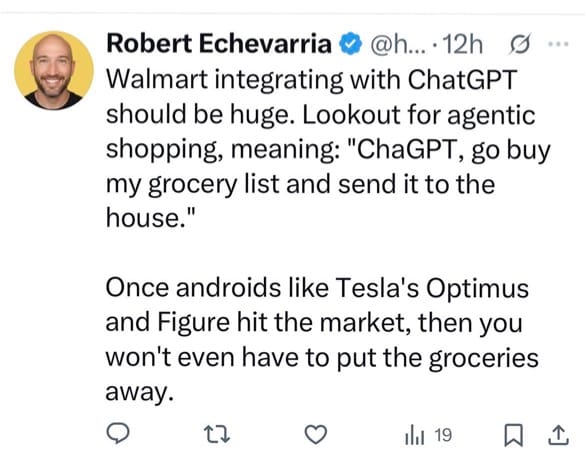
It wasn't too long ago that we were talking about fridges that would order your groceries automatically! Right now, all the talk and buzz is about these agents - but IMHO, the reality of this opportunity is years and years away.
Cringe!
That's why you need to install filters today. Here are some immediate actions to start thinking about:
- Apply a "structural shift" test: Before authorising any resources for a trend, force it to pass a simple test: Does this technology fundamentally change the economics of how we create value, or the fundamental behaviour of our customer? If it’s just a new channel for an old idea, put it on the back burner.
- The "buzzword ban": For your next strategy session, ban the current top 3 buzzwords (e.g., "AI," "Platform," "Ecosystem") unless they are accompanied by a specific, measurable business case. Force the team to describe the value without using the label.
- The "expiration date" audit: Look at your company's three biggest strategic assumptions. If they were formed more than three years ago, assume they are now internal "noise", blinding you to new signals. Stress-test them against today's reality, not yesterday's comfort.
Maybe what you really need to do today is play more Bullshit Bingo, but create a bingo card that is based on FOMO and hype!
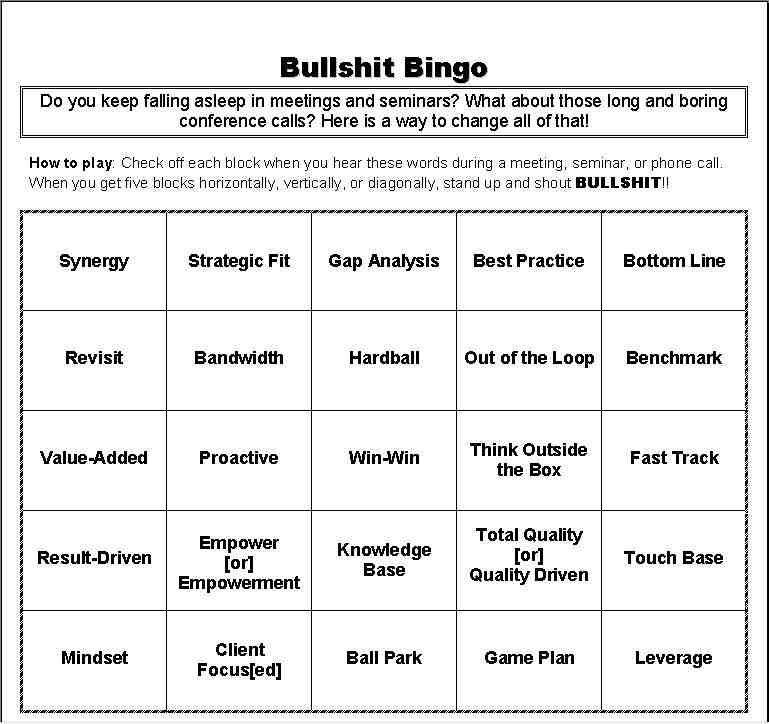
So play this at your next meeting!
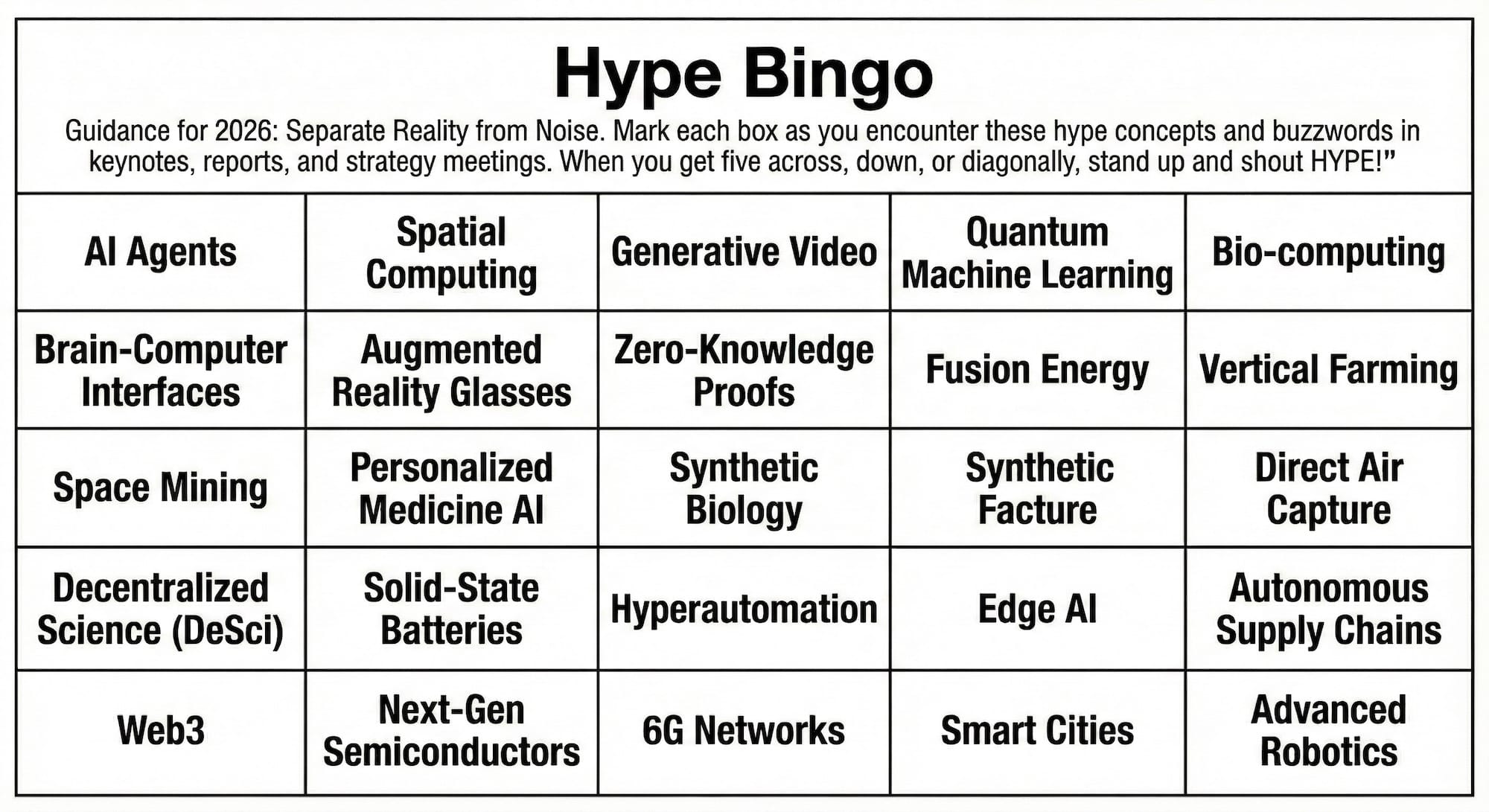
But here's the thing - some of these trends are real, and others are not.
Can you tell the difference?
You should, because that's a key principle that you really need to focus on in 2026 and beyond.
Futurist Jim Carroll believes that his hype-filter is one of the most important skilsl he has developed - and one that differentiates him from most of his peers!