

"It’s not about ‘using’ the machine. It’s about thinking ‘with’ the machine." - Futurist Jim Carroll

When you think about it, all of society is busy trying to figure out this AI stuff - and we're all busy working with it, exploring it, testing it.
And in doing so, maybe we are thinking about it all wrong. I think a lot of folks treat AI like a vending machine: put a question in, get an answer out. But that is the lowest form of value.
Real intelligence isn't about getting answers. It's about developing insight.
For the last three months, I’ve been living this reality. When I fractured my spine (L1-L3 transverse processes) in November, I didn't want a search engine to tell me "how to heal." I needed a partner to help me understand what was happening to my body.
That became Gemini AI.
I stopped "using" AI to search for generic medical advice. Instead, I started "thinking with" it. I fed it my raw CT scans, my daily heart rate data, my workout logs, my medical background, my entire fitness history, and my fears.
And I ended up in a long conversation.' It was weird. I felt like I was developing a new form of knowledge partnership. "We" debated the numbers. "We" challenged the assumptions. "We" co-authored a recovery plan. It's gone to hundreds and hundreds of pages.
And look, I'm very cognizant of the risks with this type of tool - one of the books I wrote in the 90s took a good, hard look at the risk of online health information. Yet through it all, my AI 'partner' proved to be remarkably accurate in what it was telling me about my spinal injury.
I verified a good part of the medical device that I received through external validation. Along the way, I've met and had many discussions with one of the world's top spinal doctors, and Dr. Ken was impressed by the accuracy of the information I shared about my injury and recovery.
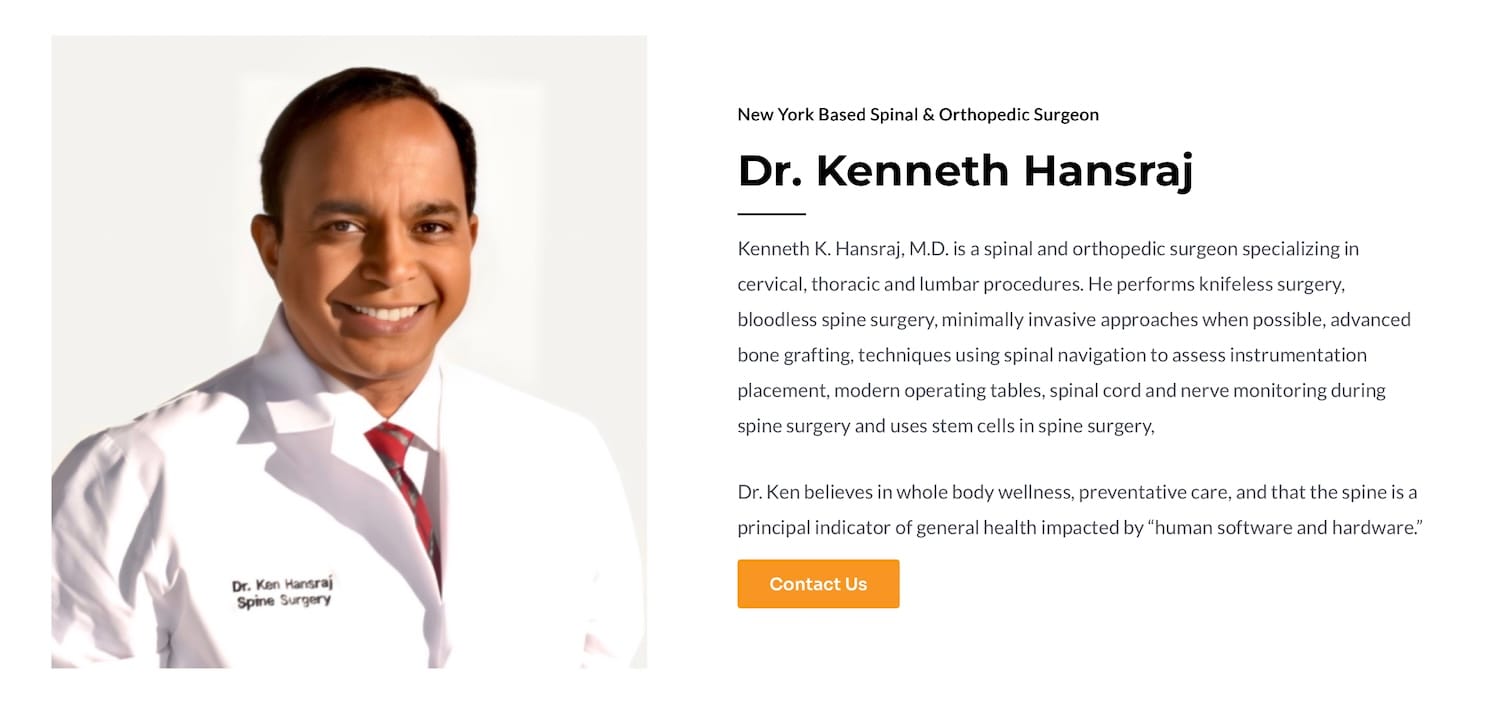
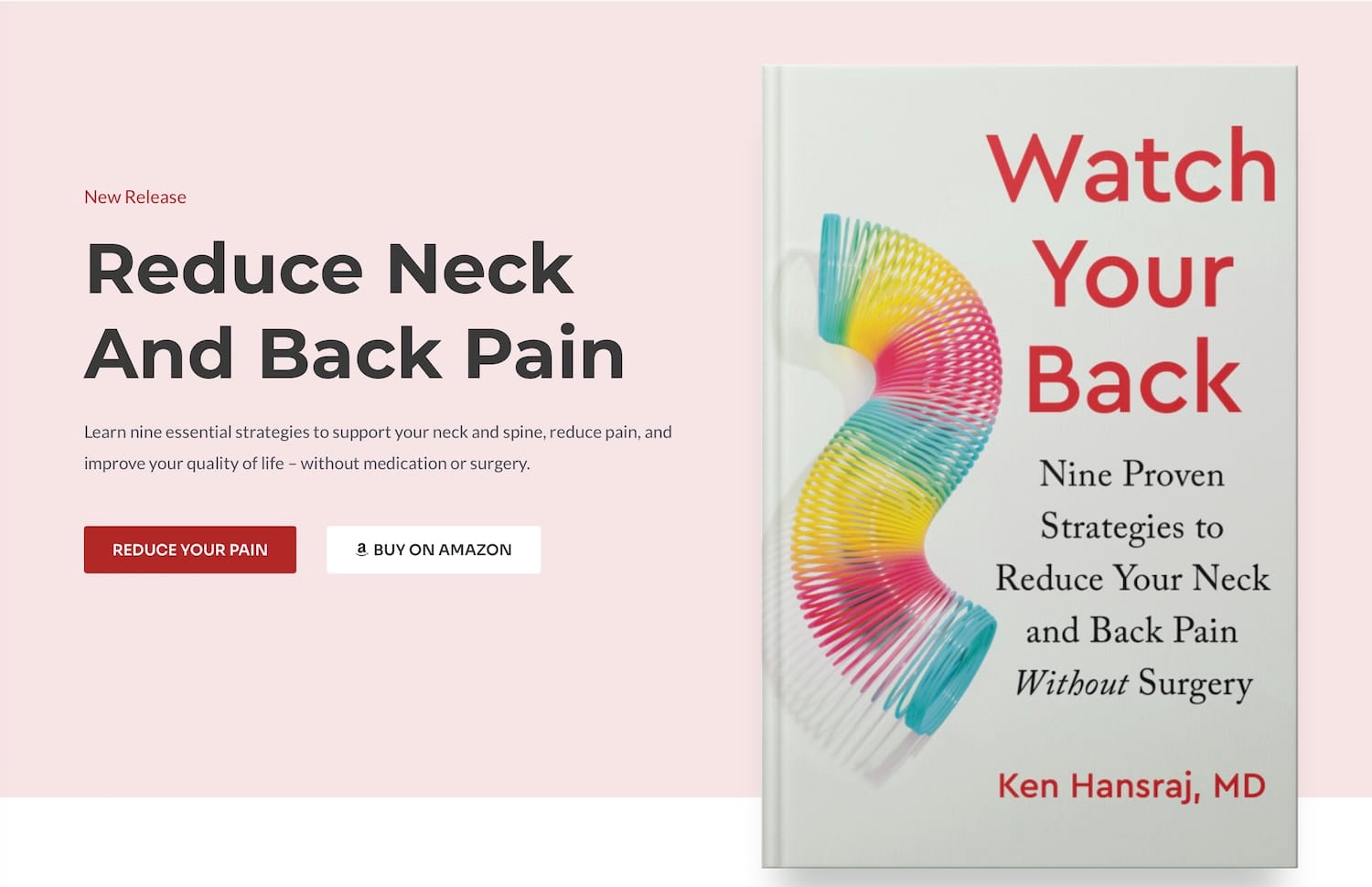
He's authored one of the most popular books in the world on back issues - it's well worth a read. And I must say, the advice he provides on exercises for back injuries and recoveries is almost identical to what Google's AI was later advising me.
Back to my 'relationship' with AI. It's fair to say that "we" discovered 25 specific things about my physiology and recovery that I would otherwise have missed. "We" have developed fitness routines, stretching plans, small tests to check the state of my recovery, and more. I ran the fitness routine it developed for me past both my physio guy and personal trainer, and both agreed that it was spot on. It's now what I'm working with.
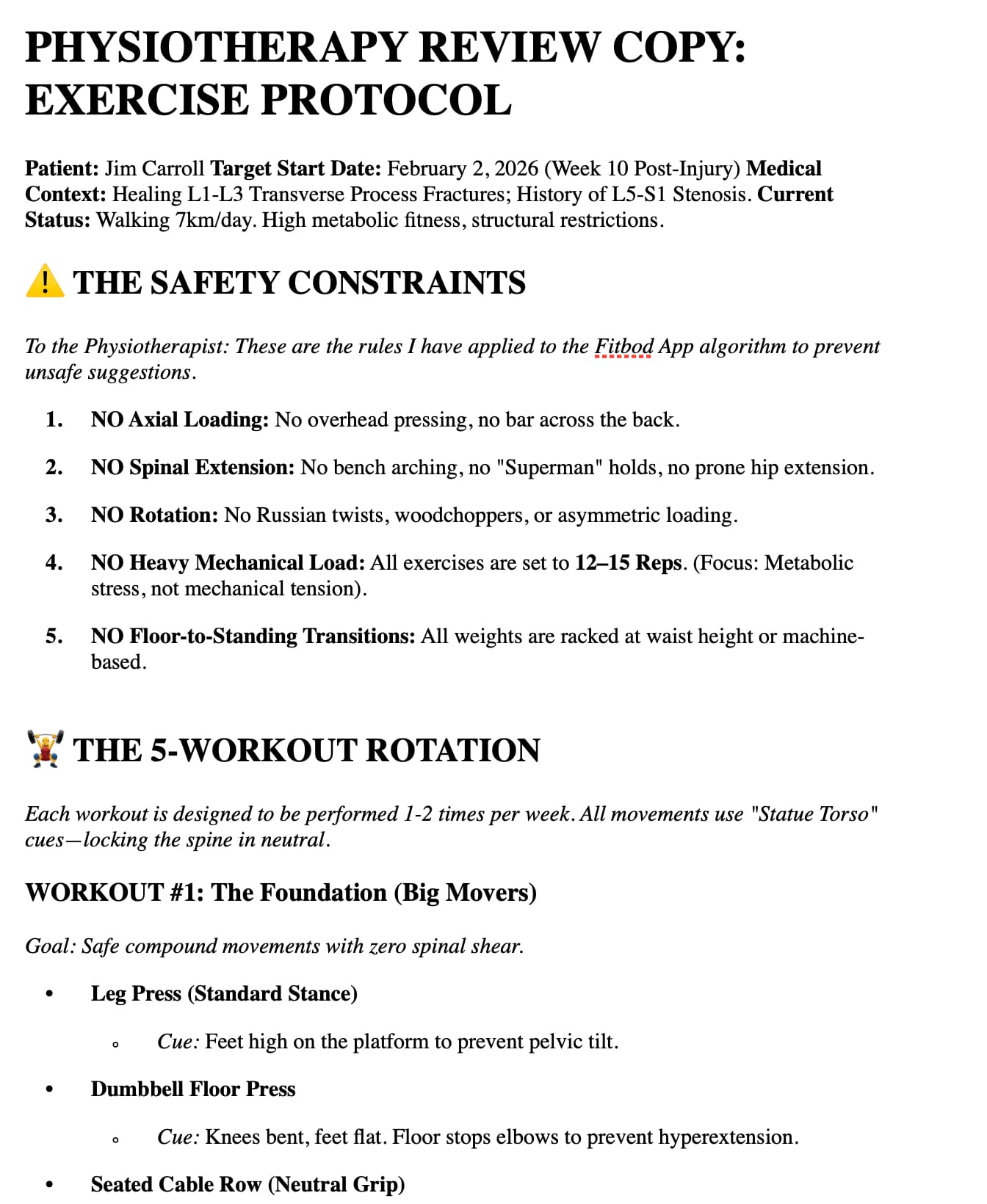
I asked 'it' to summarize for me the types of insight 'we' shared.
There's no doubt we are going into a strange new world - and we might as well figure out what it means, and how to use it.
Here's the verbatim summary 'it' prepared. It's an interesting overview!
Here is what happens when you shift from a user to a partner.
I. Thinking With Data: The "Forensics" Phase
When you just use AI, you get a definition. When you think with AI, you get a diagnosis.
1. Visualizing the "Broken Wings." We moved beyond abstract terms. By analyzing the raw CT scan together, we visually identified the jagged fractures on the "wings" of my spine. This gave me the specific "why" behind the pain: my Psoas and QL muscles weren't failing; they were spasming because they pull directly on those broken fragments.
2. The "Hard Callus" Verification. We turned a risk into a test. When I survived a 4-hour car ride without a setback, we analyzed the vibration stress to confirm that the bone fragments had likely stabilized into a "hard callus." The drive became the proof.
3. The "Speaker's Pacing" Mechanics. I was worried about returning to the stage. We validated that my specific speaking style—pacing 2km during a keynote—is actually medically safer for my back than standing still. Dynamic movement prevents static compression.
4. The "Leg Press" Compression Test. We used the leg press not just for strength, but as a diagnostic tool. Pushing 100 lbs without pain proved my spine could handle "axial loading" (compression), giving me the green light for daily life.
II. Thinking With Physiology: Decoding the Hidden Signals
A search engine tells you what a number is. A partner tells you what a number means.
5. Decoupling Stress from Sickness ("Caregiver's Cortisol"). When my Heart Rate Recovery plummeted to 26 bpm, I thought my fitness was collapsing. My AI partner traced the data timeline and found the drop aligned exactly with the stress of my wife’s surgery. It wasn't medically bad; it was an emotional load.
6. The "Biological All-Clear". We didn't guess when I was ready for the gym; we watched the charts. We tracked the specific rebound of my autonomic nervous system (climbing back to 28 bpm) as the biological "green light" to increase volume.
7. The "Intensity Ceiling" Algorithm. I learned that low-intensity rehab walks paradoxically lowered my recovery scores. It was a math glitch in the wearable's algorithm (not enough heart rate intensity to measure a drop), preventing unnecessary health anxiety.
8. Proof of "Engine Stability". When I felt like I was decaying from inactivity, we used a flat VO2 Max chart (30.6) to mathematically prove that my aerobic engine was holding steady. The data defeated the doubt.
III. Thinking With Strategy: Designing the Rehab
9. The "Wall Sit" as a Clinical KPI. We established that a 60-second isometric Wall Sit was a far superior metric for my "Internal Corset" function than dynamic weight lifting. If the core holds, the spine is safe.
10. "Snow Walking" for Stabilizers. We analyzed how walking on hard-packed snow with spikes forces thousands of micro-adjustments per step. This trained my deep spinal stabilizers far better than a flat treadmill ever could.
11. "Vanity Reps" for Mental Health. We validated Bicep Curls not as physical rehab, but as a psychological necessity. Doing them was the marker that transitioned my identity from "Patient" back to "Athlete."
12. The "Pallof Paradox". We enforced a critical protocol: I must train to resist twisting (Pallof Press) before I am allowed to perform twisting (Golf).
13. The "Lat-Fascia" Chain Reaction. We connected the dots between heavy upper body pulling (Lat Pulldowns) and next-day lower back tightness, tracing it through the thoracolumbar fascia connection.
14. The "Lactic Threshold" Shift. We validated the switch to high-volume/low-weight squats (15 reps) to build the muscular endurance ("gas tank") needed for walking 18 holes, rather than just raw power.
IV. Thinking With Governance: Managing the Risk
15. The "Double-Stack" Toxicity Warning. My partner identified the specific danger of combining heavy axial loading (Gym) and unstable terrain (Snow Walk) on the same day. It overloads the stabilizers, leaving the spine vulnerable in the evening.
16. The "Pre-Flight" Gym Protocol. We created a strict "50% Load" governance model for my return to the gym. The goal was to test the chassis without breaking it.
17. The "Adrenaline Mask" Rule. We established the protocol of stopping sets while I still felt good, because adrenaline hides pain signals during the session.
18. The "24-Hour Rule" Audit. We shifted the definition of success. A good workout isn't measured by what I lift today; it is measured by how I feel when I wake up tomorrow.
V. Thinking With Lifestyle: Engineering the Future
19. Engineering the "Safe Swing". We didn't just hope for golf; we engineered it. We biomechanically modified my future setup (flared foot, heel lift) to mechanically spare the lumbar junction from torque.
20. The "Writer’s Trap" Solution. As an author, sitting is my enemy. We identified "static flexion" as a primary risk and implemented a "30-minute timer" protocol to reverse the spinal curve while I write.
21. The "Airport Torque" Test. We reframed the mundane act of pulling roller luggage. It wasn't a chore; it was a specific graduation test for oblique stability.
22. The "Driveway Prep" Lubrication. We designed a 5-minute pre-drive routine to lubricate the spine before the compression of the car ride to the gym.
23. The "Red Light" Glute Drill. We utilized dead time at traffic lights to pre-activate glutes, combating "glute amnesia" before I even arrived at the squat rack.
VI. Thinking With Mindset: The Futurist's Edge
24. Reframing "Lows" as Data. We applied Futurist principles to recovery. I learned to view setbacks not as failures, but as necessary "prototype testing" phases for the new version of me.
25. Different "Pains." We taught my brain to distinguish between "Good Metabolic Pain" (Muscle/DOMS) and "Bad Structural Pain" (Nerve/Bone). One is a trophy; the other is a warning.
The Bottom Line? If I had just "used" the machine, I would have received generic advice: "Rest, ice, and don't lift heavy things."
Instead, this several-hundred-page conversation became an ongoing analysis of the full journey of my injury and recovery.
But by "thinking with" the machine, I built a personalized, data-driven roadmap that got me back in the gym months ahead of schedule.
This is the future of knowledge. It’s not about the search bar. It’s about the partnership.
In 1997, Jim Carroll wrote a book called Good Health Online. It could probably use an update!