
"The road to the future can often be found in the missteps of the past!" - Futurist Jim Carroll
So, is there anything going on in the automotive industry right now?
That was the question, and here is the image I used with it, when I spoke at an automotive dealer conference earlier this week.
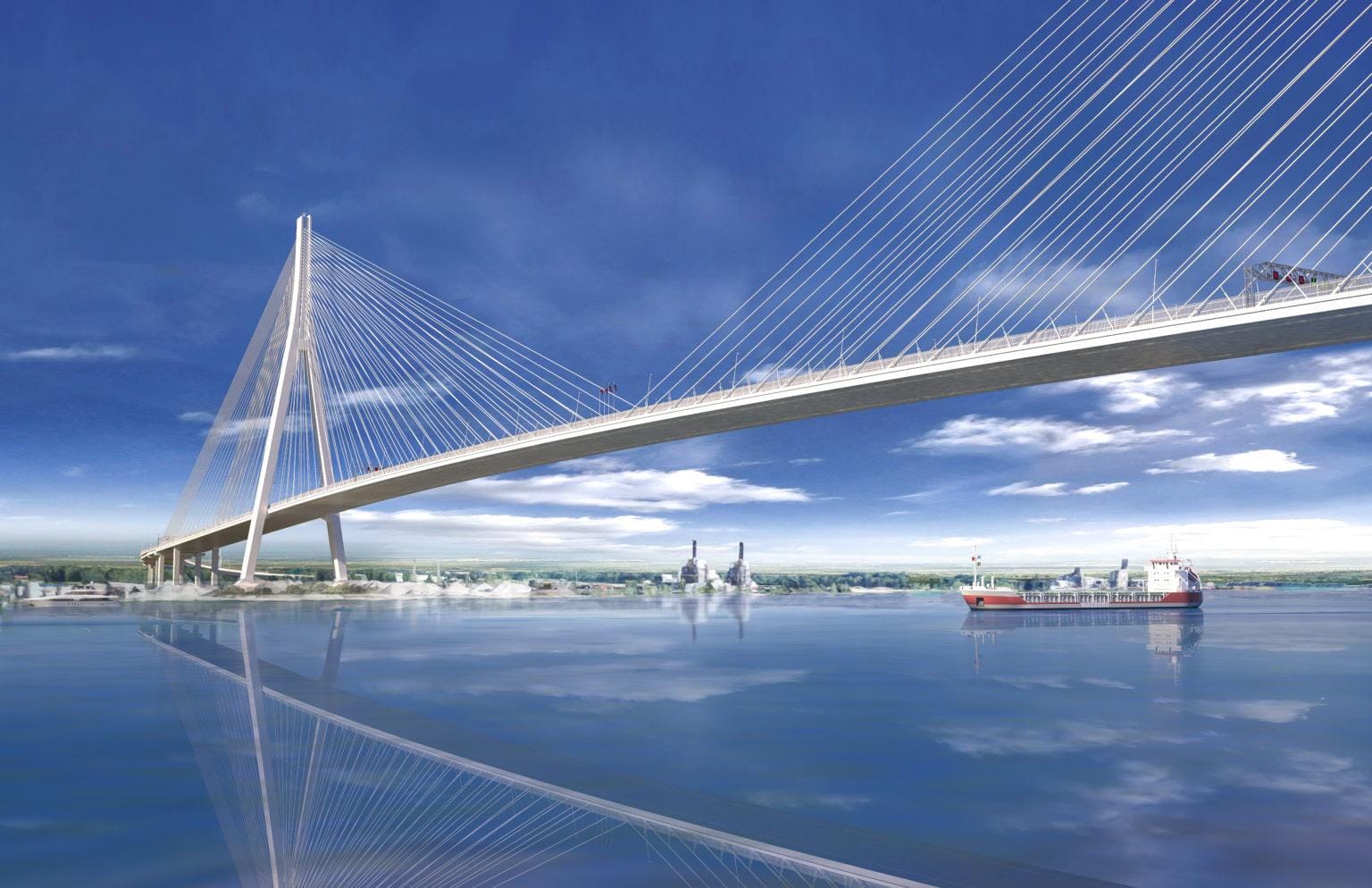
What a wild industry!
Anyways, I spoke to this same event 14 years ago - and found an original interview. I pretty much nailed the predictions.
Yet, there were many that were missed or a bit off.
Let's revisit! Here's a set of slides I used in my talk - looking back, looking at today, and looking forward.
The Politicization of the Drivetrain
Quite simply, electric vehicles became part of the culture wars.
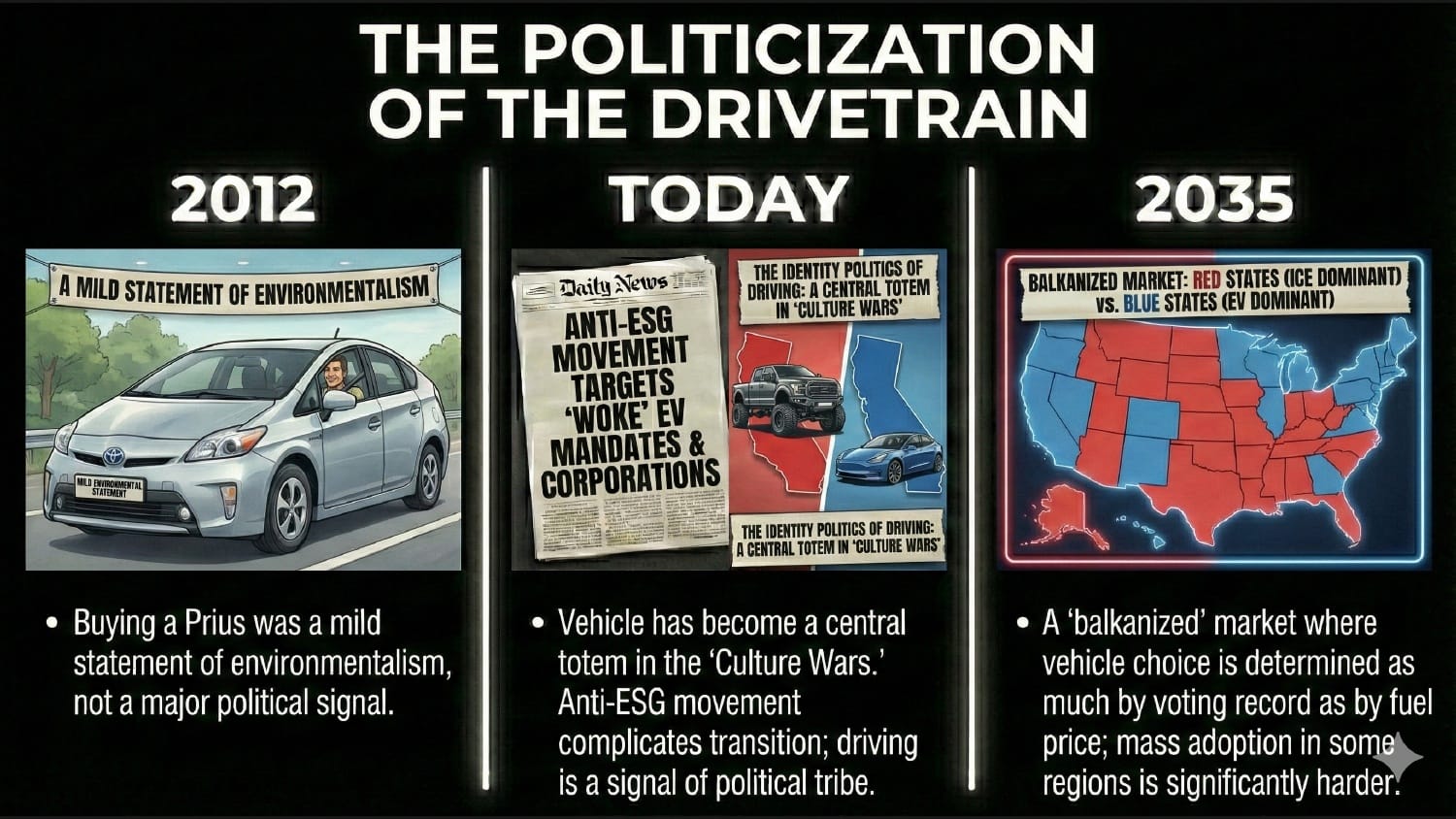
- 2012: Buying a Prius was a mild statement of environmentalism, not a major political signal.
- Today: Vehicle has become a central totem in the 'Culture Wars.' Anti-ESG movement complicates transition; driving is a signal of a political tribe.
- 2035: A 'balkanized' market where vehicle choice is determined as much by voting record as by fuel price; mass adoption in some regions is significantly harder.
The Linear March to Pure Electrification (BEV)
It was believed that one day, there would be ICE (internal combustion engine) vehicles, and then there would be a world of all-EVs. It's not happening like that - hybrids are taking over as people simply weren't comfortable with full electric, for a variety of real (and not-so-real) reasons.
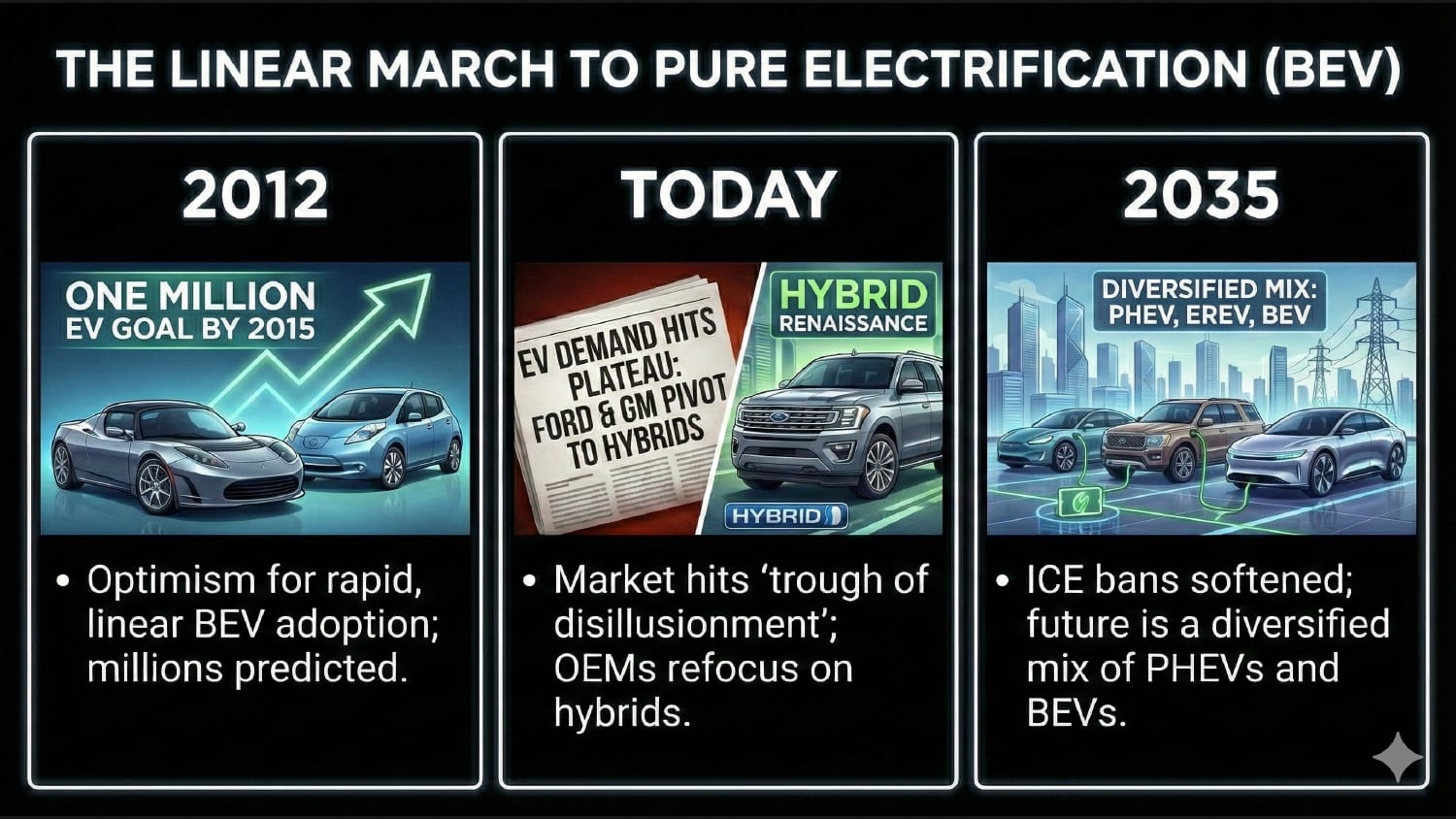
- 2012: Optimism for rapid, linear BEV adoption; millions predicted.
- Today: Market hits 'trough of disillusionment'; OEMs refocus on hybrids.
- 2035: ICE bans softened; future is a diversified mix of PHEVs and BEVs.
The Evolution of Autonomous Vehicles
Cars would drive themselves. Massive disruptive change! Didn't happen - it's hard to get to 99.9999% accuracy, which is pretty much what's required. I've got a Tesla with 'full self driving' - but am never really fully comfortable.
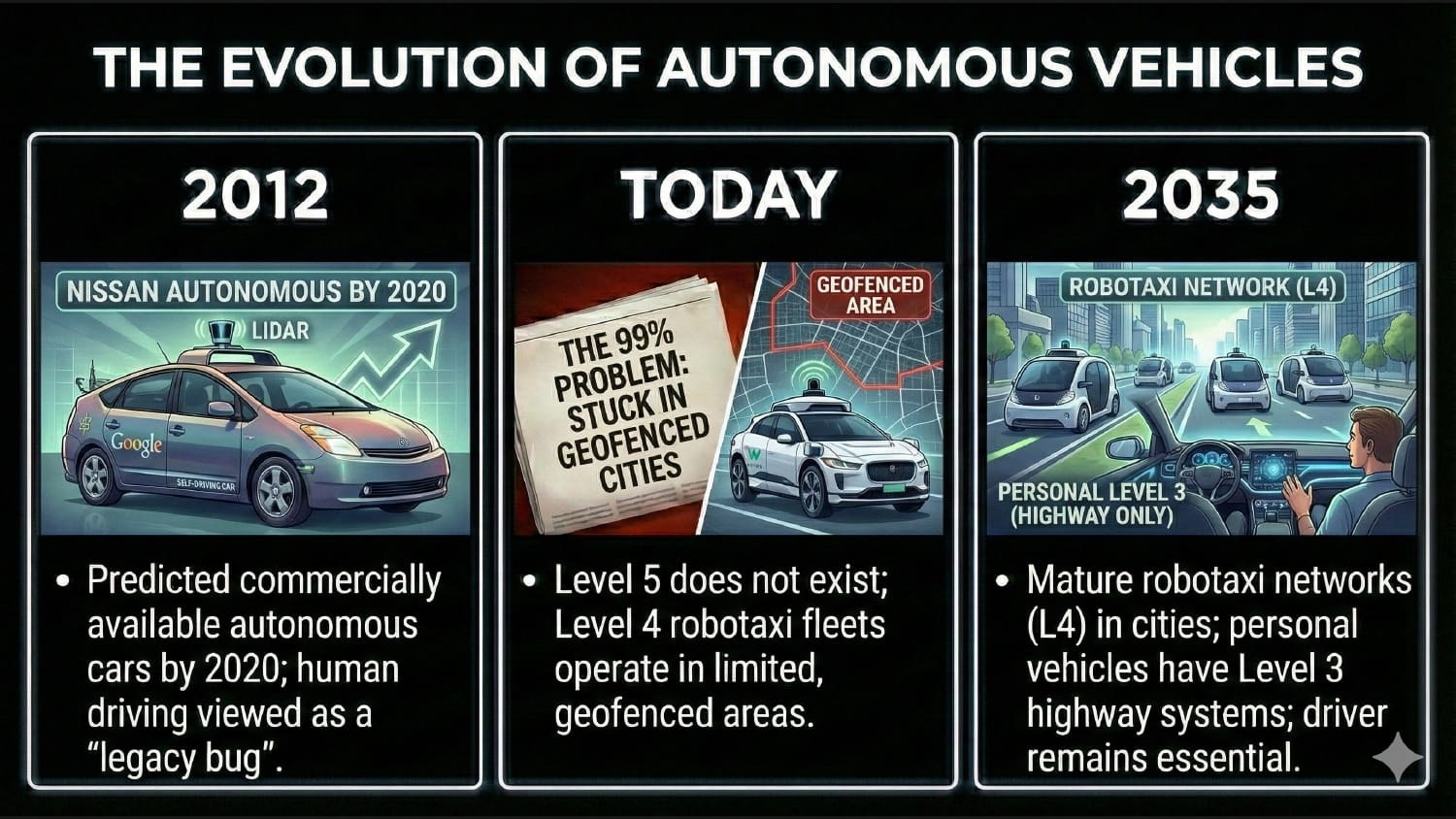
- 2012: Predicted commercially available autonomous cars by 2020; human driving viewed as a "legacy bug".
- Today: Level 5 does not exist; Level 4 robotaxi fleets operate in limited, geofenced areas.
- 2035: Mature robotaxi networks (L4) in cities; personal vehicles have Level 3 highway systems; driver remains essential.
The Apple iCar Disruption
Everyone thought Apple was going to build a car, and it would be game-changing! It didn't happen.
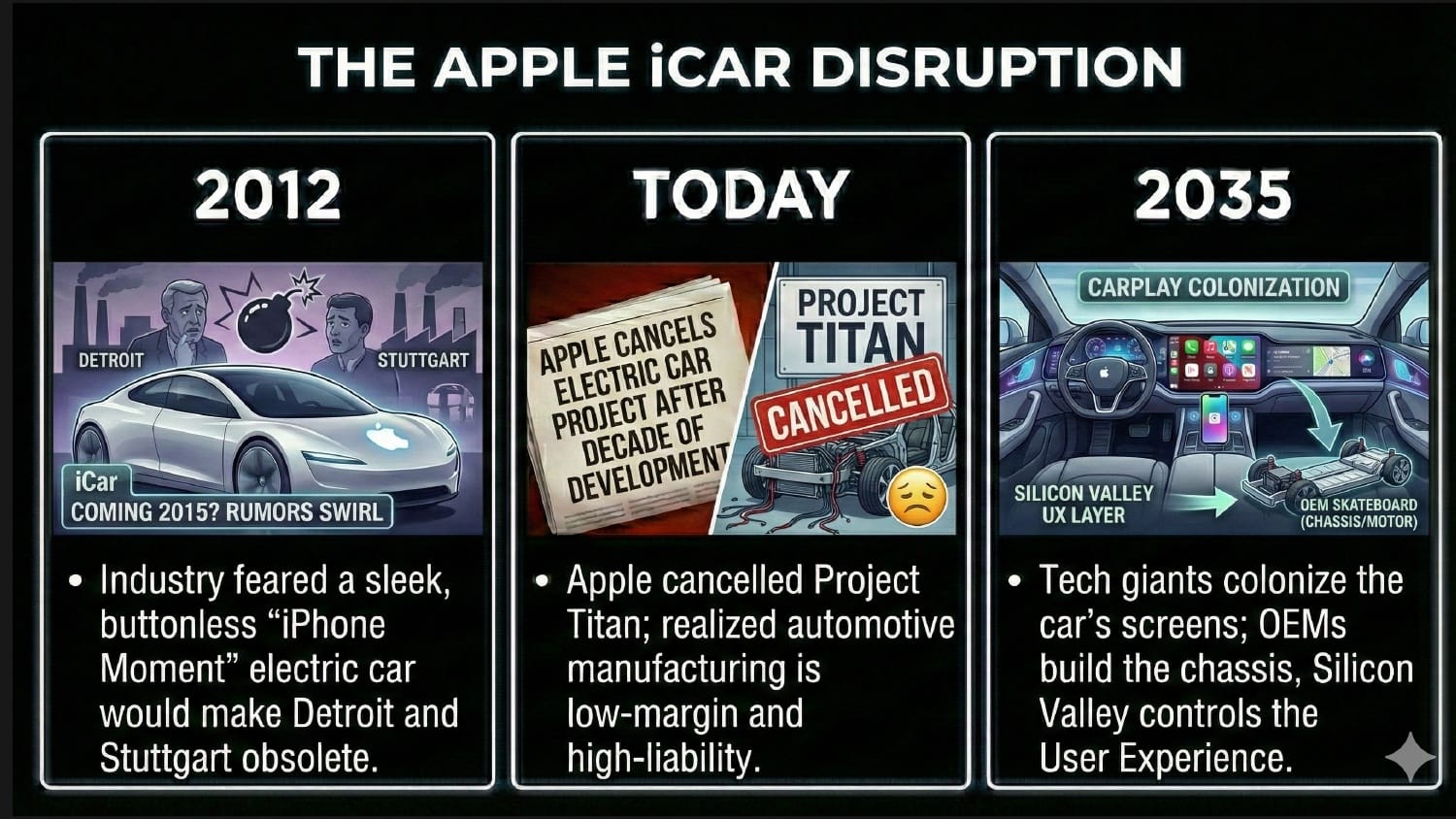
- 2012: Industry feared a sleek, buttonless "iPhone Moment" electric car would make Detroit and Stuttgart obsolete.
- Today: Apple cancelled Project Titan; realized automotive manufacturing is low-margin and high-liability.
- 2035: Tech giants colonize the car's screens; OEMs build the chassis, Silicon Valley controls the User Experience.
Mobility-as-a-Service (MaaS) Replacing Ownership
People weren't going to buy cars because we were all going to be using car-sharing services. Nope.
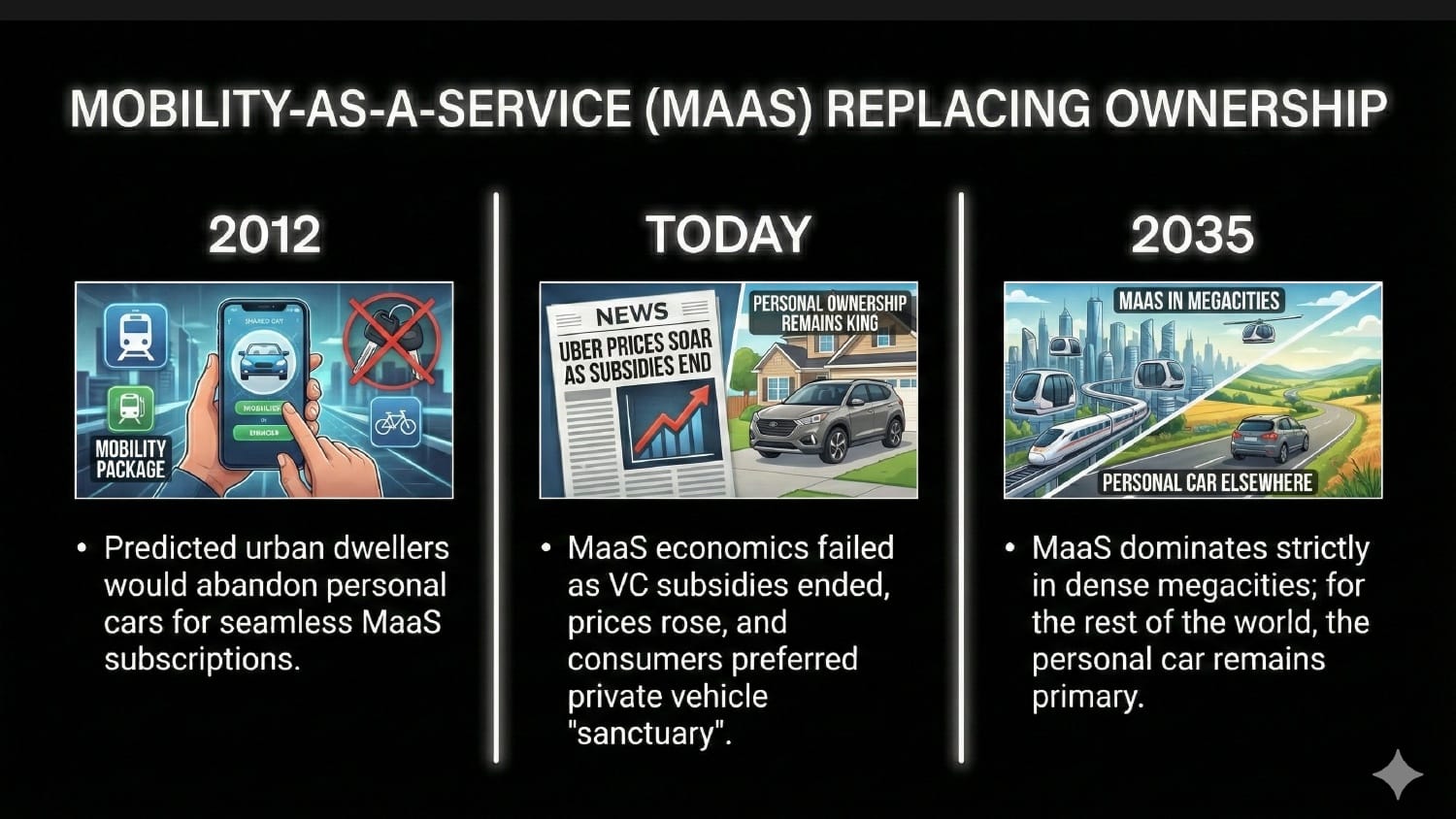
- 2012: Predicted urban dwellers would abandon personal cars for seamless MaaS subscriptions.
- Today: MaaS economics failed as VC subsidies ended, prices rose, and consumers preferred private vehicle "sanctuary".
- 2035: MaaS dominates strictly in dense megacities; for the rest of the world, the personal car remains primary.
Millennials Will “Kill" Car Culture
Not only that, but younger people weren't going to buy cars - because they were never into 'car culture.' Another nope - they got married, had kids, got cars!
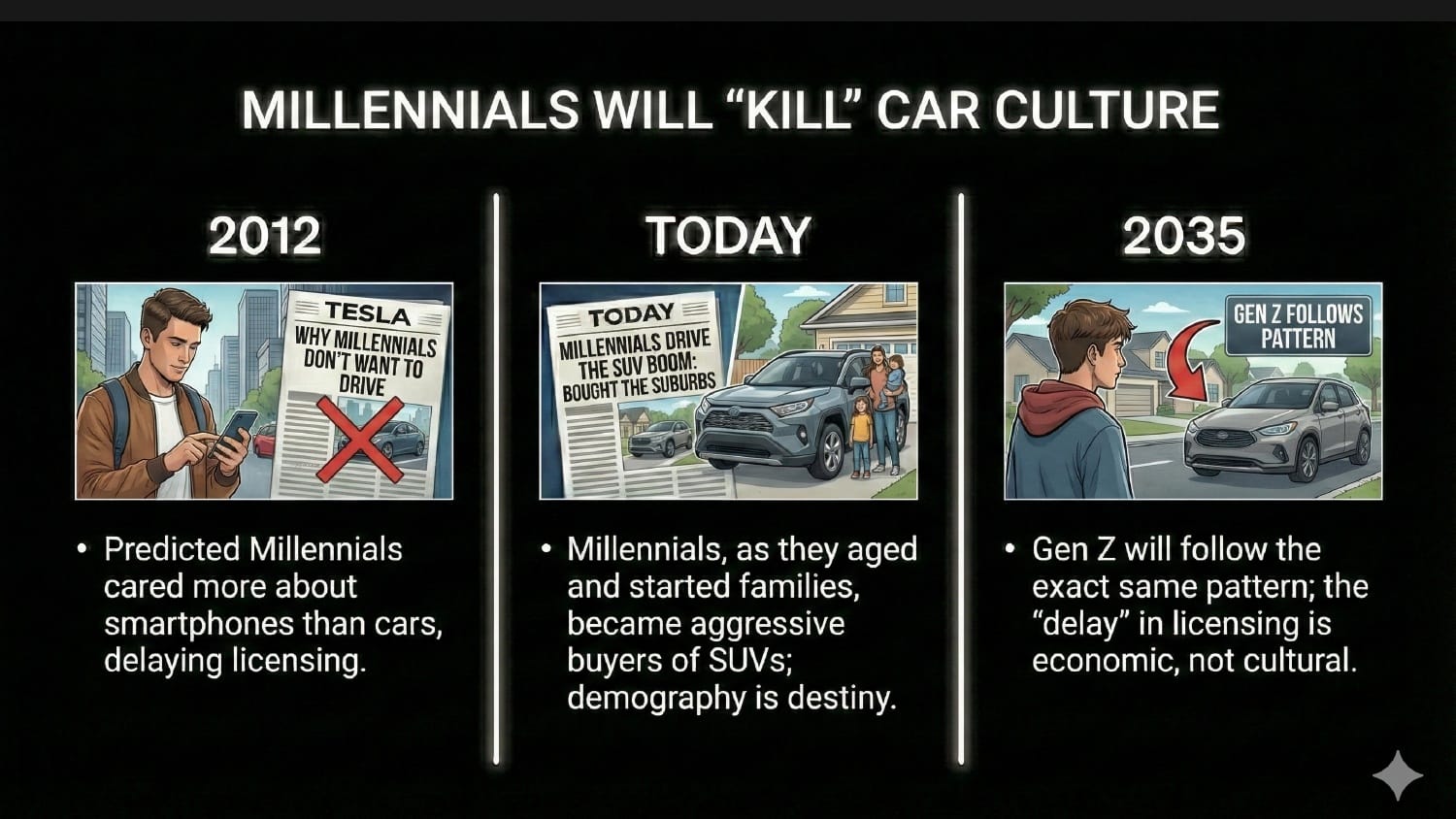
- 2012: Predicted Millennials cared more about smartphones than cars, delaying licensing.
- Today: Millennials, as they age and start families, become aggressive buyers of SUVs; demography is destiny.
- 2035: Gen Z will follow the exact same pattern; the "delay" in licensing is economic, not cultural.
The "Peak Car" Hypothesis
All of this meant that we were going to hit the top limit of sales.
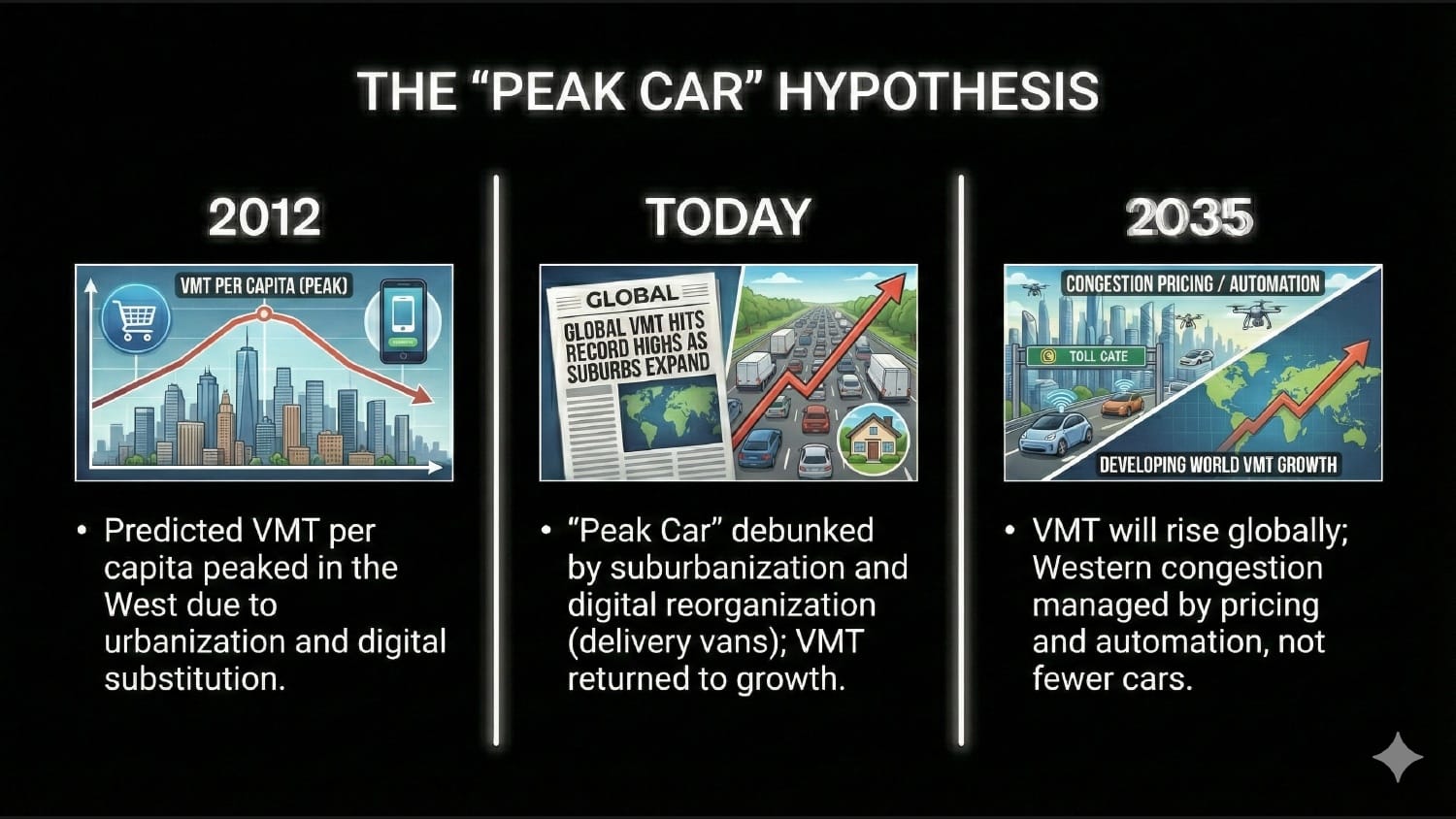
- 2012: Predicted VMT per capita peaked in the West due to urbanization and digital substitution.
- Today: "Peak Car" debunked by suburbanization and digital reorganization (delivery vans); VMT returned to growth.
- 2035: VMT will rise globally; Western congestion managed by pricing and automation, not fewer cars.
Small Car Dominance (Urbanization)
And the car was going to keep becoming smaller. Um, LOL?
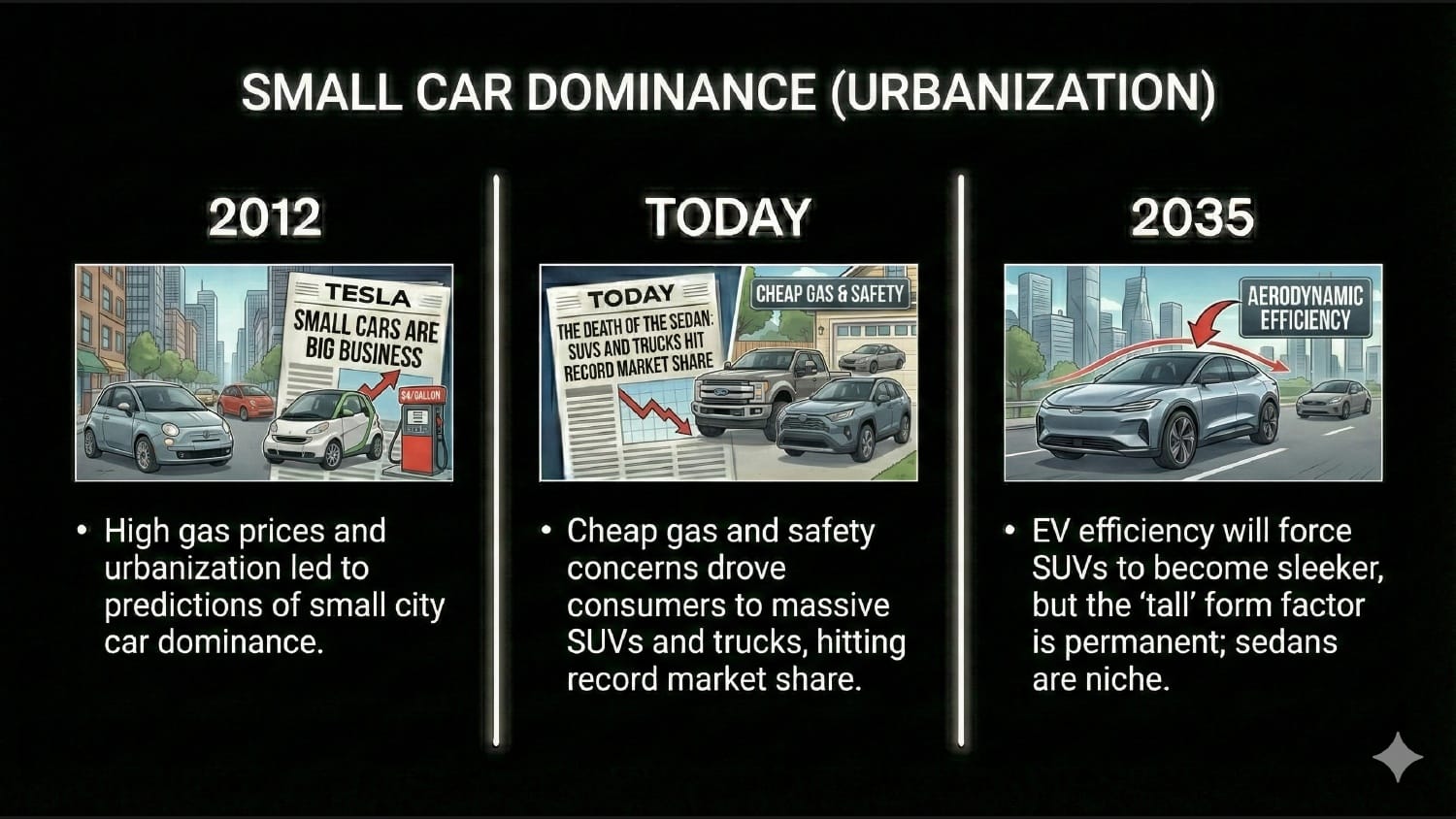
- 2012: High gas prices and urbanization led to predictions of small city car dominance.
- Today: Cheap gas and safety concerns drove consumers to massive SUVs and trucks, hitting record market share.
- 2035: EV efficiency will force SUVs to become sleeker, but the 'tall' form factor is permanent; sedans are niche.
Low Interest Rate / Easy Credit Environment
Cars would continue to be inexpensive! Credit would be easy!
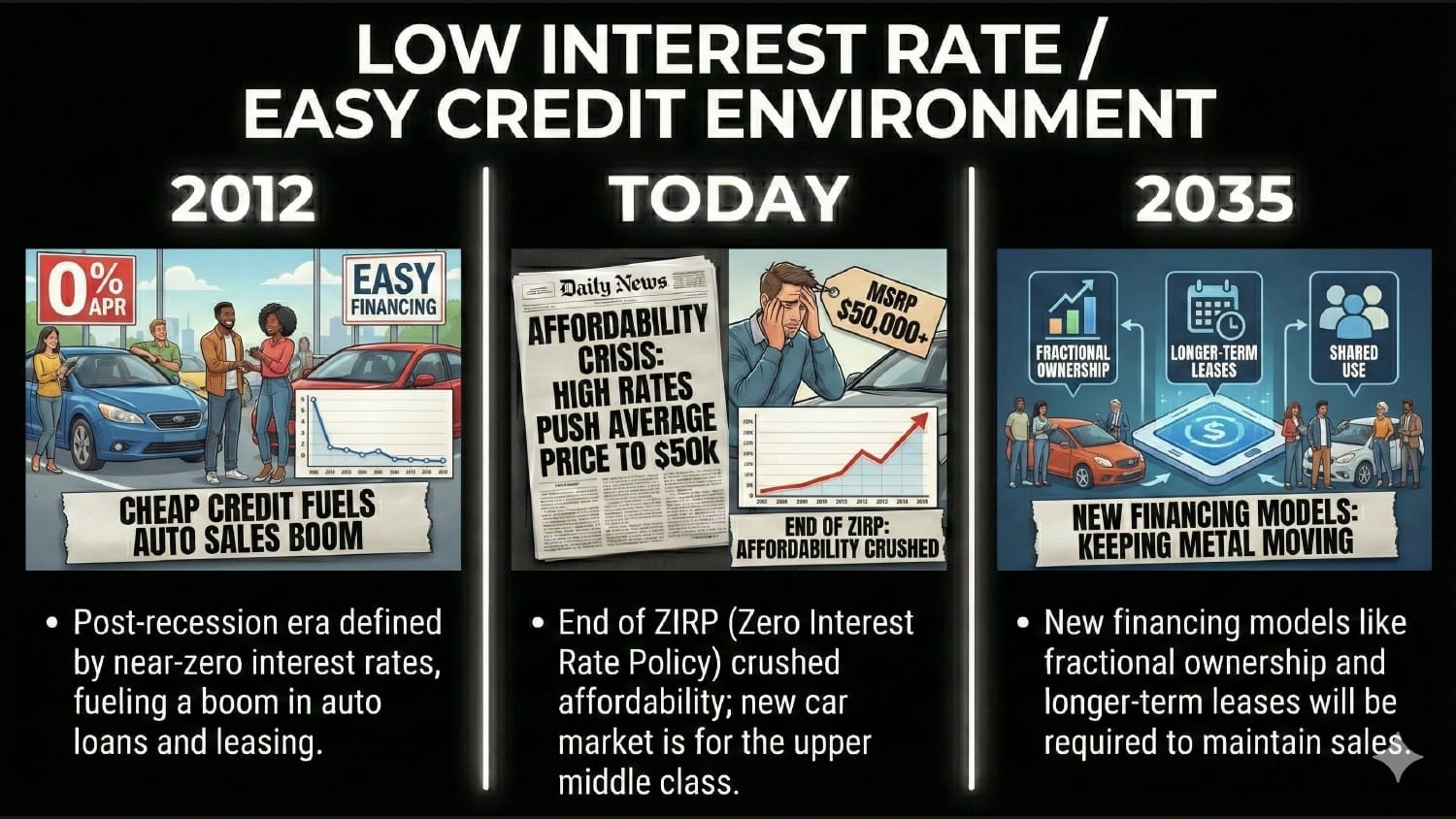
- 2012: Post-recession era defined by near-zero interest rates, fueling a boom in auto loans and leasing.
- Today: End of ZIRP (Zero Interest Rate Policy) crushed affordability; the new car market is for the upper middle class.
- 2035: New financing models like fractional ownership and longer-term leases will be required to maintain sales.
Western Hegemony in Auto Manufacturing
Western car companies would own the planet. Sorry, not happening. China does.
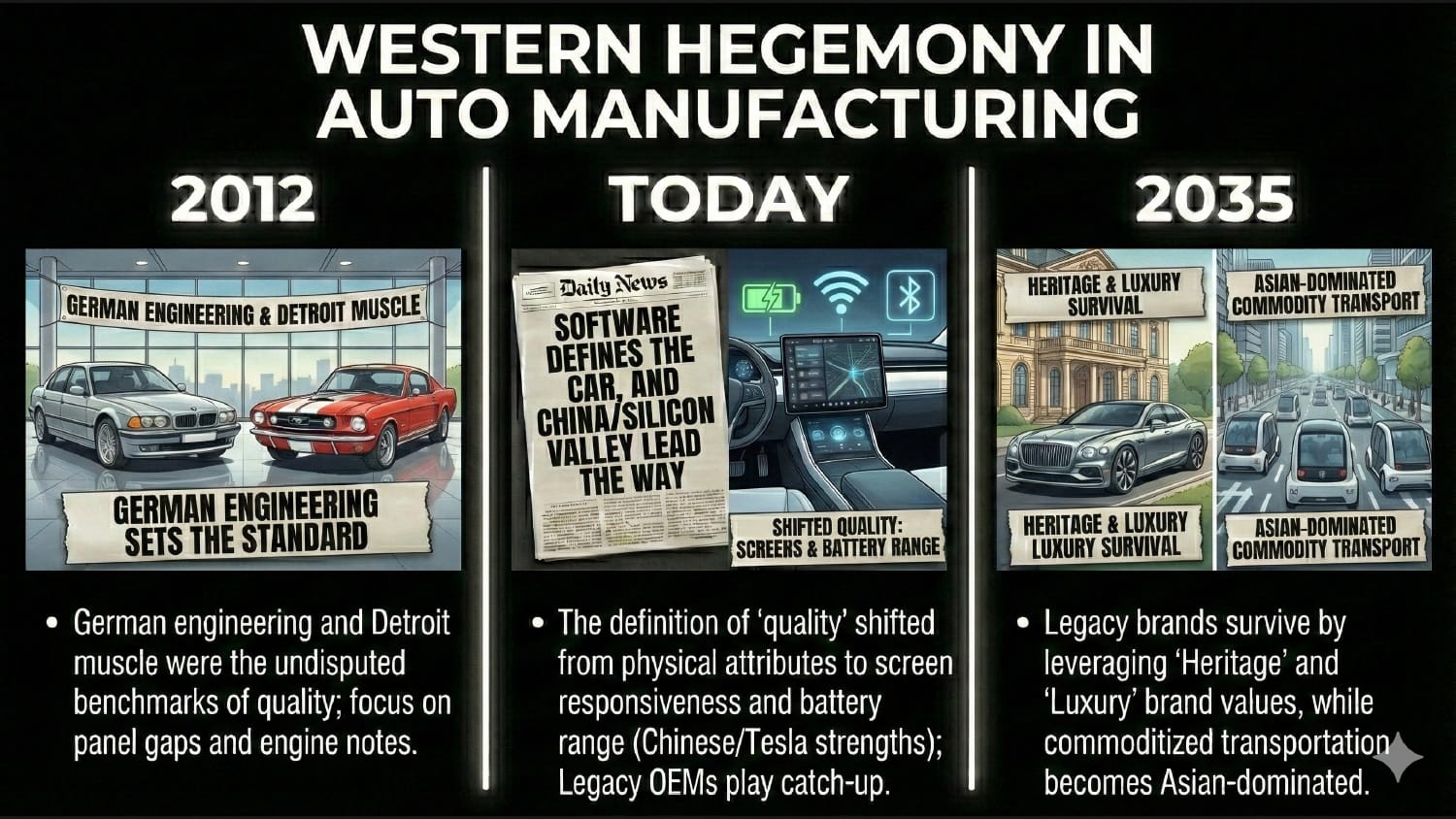
- 2012: German engineering and Detroit muscle were the undisputed benchmarks of quality; focus on panel gaps and engine notes.
- Today: The definition of 'quality' shifted from physical attributes to screen responsiveness and battery range (Chinese/Tesla strengths); Legacy OEMs play catch-up.
- 2035: Legacy brands survive by leveraging 'Heritage' and 'Luxury' brand values, while commoditized transportation becomes Asian-dominated.
The Death of the Dealership (Agency Model)
Car dealers would die because we will buy all of our cars online. Some of this happened, but the dealers fought back!
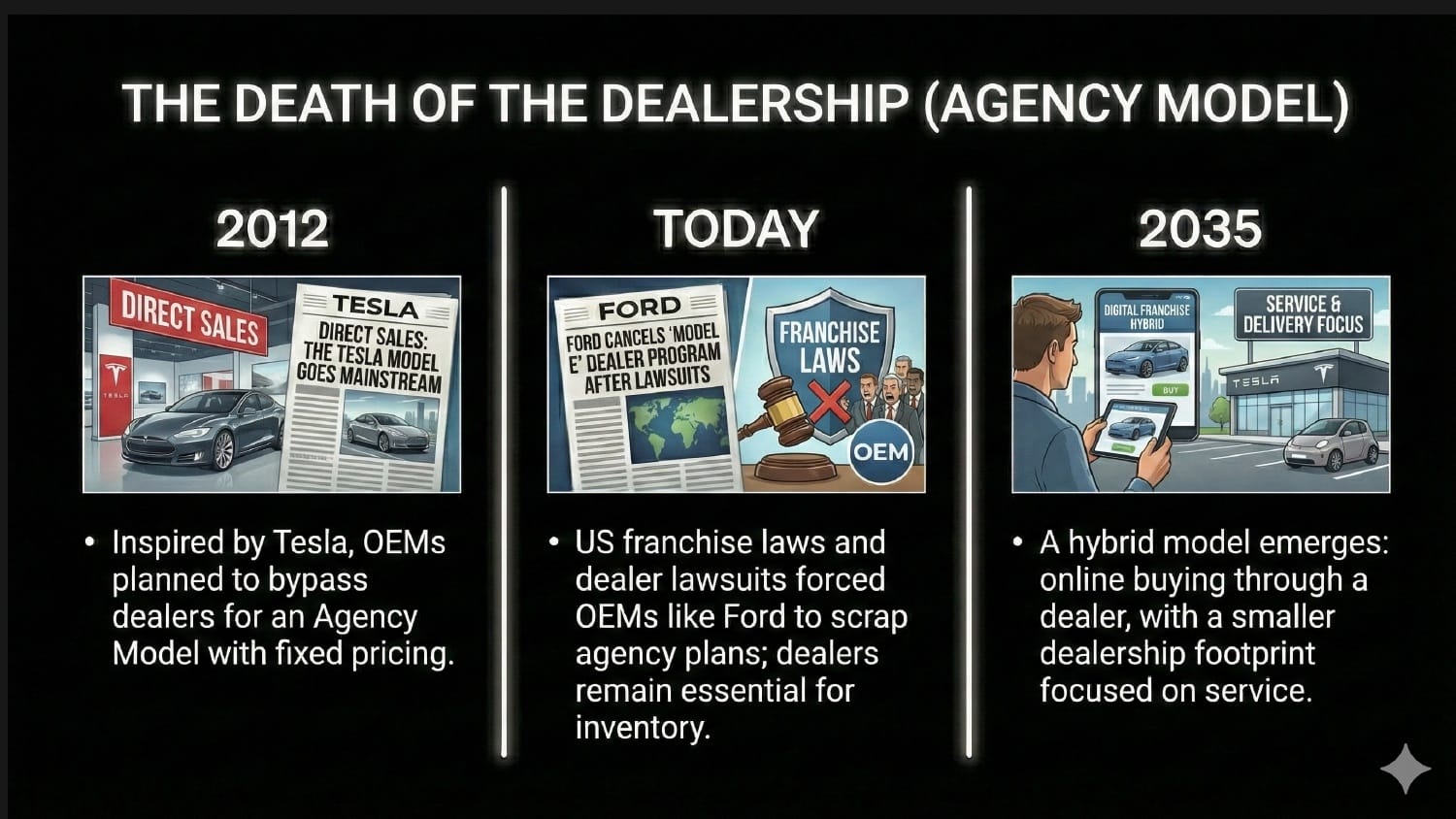
- 2012: Inspired by Tesla, OEMs planned to bypass dealers for an Agency Model with fixed pricing.
- Today: US franchise laws and dealer lawsuits forced OEMs like Ford to scrap agency plans; dealers remain essential for inventory.
- 2035: A hybrid model emerges: online buying through a dealer, with a smaller dealership footprint focused on service.
The Powertrain & Energy Miscalculations
Diesel, baby! Oops! Fraud, baby!
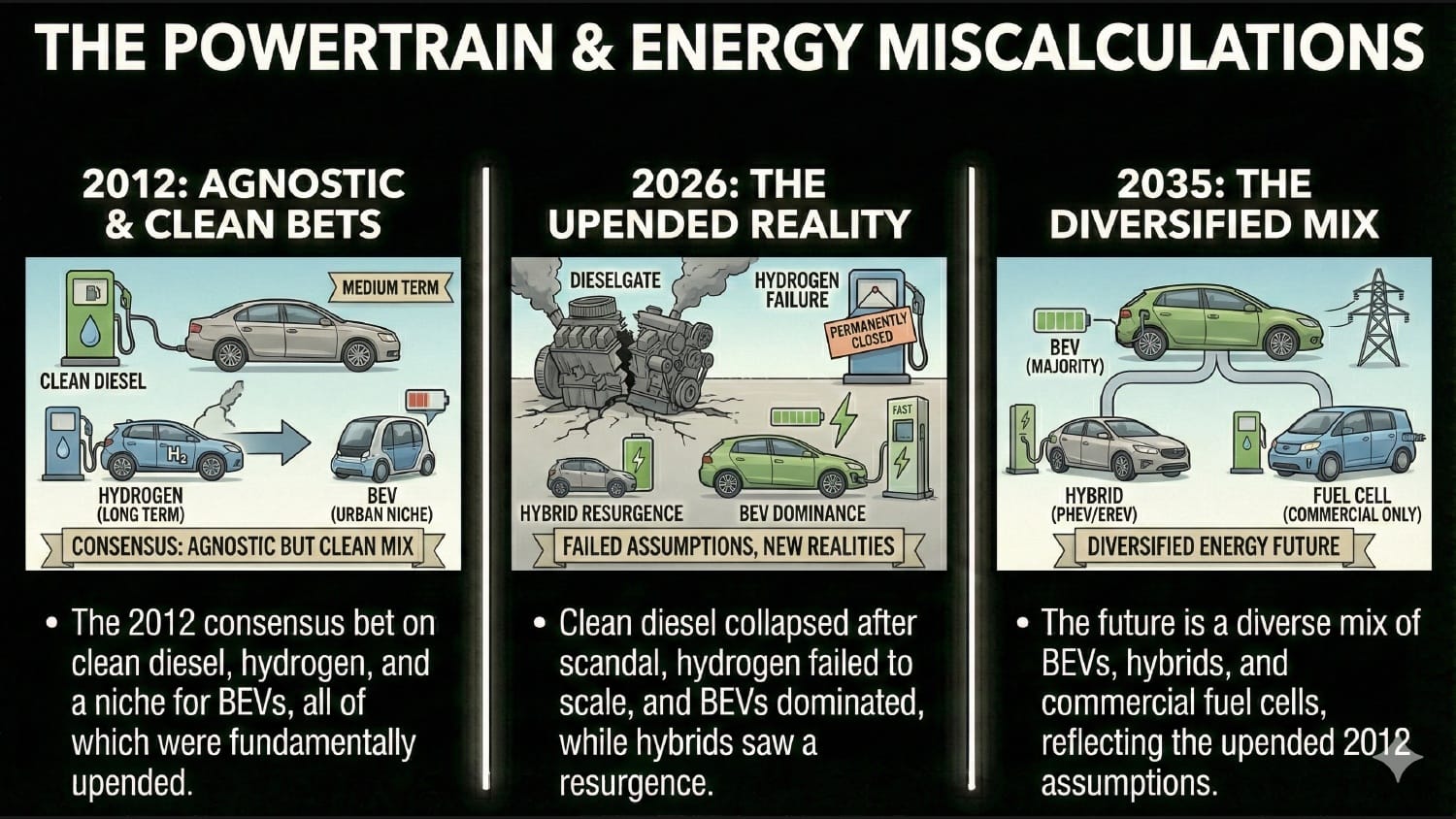
- 2012: The 2012 consensus bet on clean diesel, hydrogen, and a niche for BEVs, all of which were fundamentally upended.
- Today: Clean diesel collapsed after the scandal, hydrogen failed to scale, and BEVs dominated, while hybrids saw a resurgence.
- 2035: The future is a diverse mix of BEVs, hybrids, and commercial fuel cells, reflecting the upended 2018 assumptions.
Lessons? Sometimes the road to the future is found by examining the missteps of the past!
Futurist Jim Carroll's view of the future of the auto industry? Globally, all China, and US car companies become small niche players.